
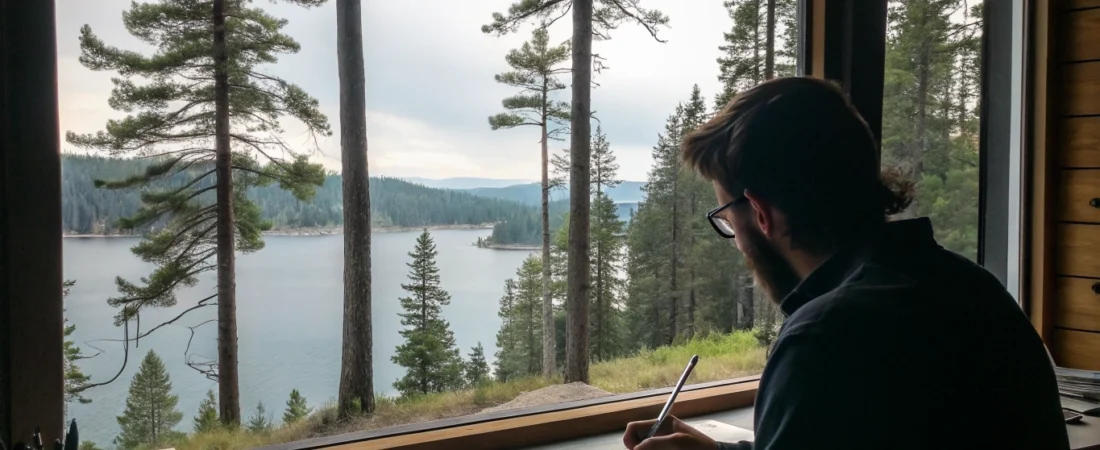
Introduction to Whispering Pines Studio
Every writer needs a place where the noise of the day begins to settle. It does not have to be a cabin hidden deep in the woods, a room lined with rare books, or a perfect writing desk facing a perfect window. Sometimes, the right environment begins with something much simpler: a quiet corner, a familiar chair, a cup of coffee, and the decision to make space for thought.
Whispering Pines Studio was created around that idea.
At its heart, Whispering Pines Studio is more than a name. It is a creative atmosphere. It is a place where stories can breathe, where characters can develop over time, and where the writing process is allowed to be thoughtful rather than rushed. In a world that often pushes speed, noise, and constant interruption, the studio environment is meant to suggest something different: calm, reflection, imagination, and steady creative work.
The word “whispering” matters. It suggests quiet movement, soft ideas, and the kind of inspiration that does not always arrive loudly. Some story ideas announce themselves immediately, but many do not. They arrive in pieces. A character’s expression. A line of dialogue. A memory of a place. A question that will not quite go away. The best writing environment gives those quieter ideas room to surface.
The “pines” matter too. Pines suggest endurance, shelter, and a natural rhythm. They stand through weather. They bend without disappearing. They offer shade, texture, and stillness. For a writing studio, that image feels right. Stories are often built the same way—slowly, patiently, and with attention to the layers that make them last.
A calm literary environment does not mean the work itself is always calm. Fiction is full of tension, conflict, uncertainty, heartbreak, humor, longing, and discovery. Characters make mistakes. Relationships shift. Old expectations fall apart. New paths open. But the environment in which those stories are created should offer a sense of steadiness. It should be a place where complexity can be explored without chaos taking over the process.
That is the goal behind Whispering Pines Studio.
The studio represents a working space for writing, editing, planning, and developing stories with care. It is where an idea can move from a single spark into a chapter, a chapter into a book, and a book into something larger. It is also where the practical side of authorship comes into focus: blog posts, character profiles, series planning, cover concepts, marketing language, and the ongoing effort to connect stories with readers.
For readers, a literary environment matters because it shapes the experience behind the page. The stories may take place in coastal towns, school hallways, football stadiums, beaches, restaurants, family homes, or places far removed from everyday life. But behind those scenes is the studio mindset: patient observation, emotional honesty, and a belief that stories are worth building carefully.
There is also comfort in returning to a familiar creative space. Readers often return to authors not only for plot, but for atmosphere. They want to feel something recognizable. They want a voice they can trust. They want a setting, a rhythm, and a sense of emotional continuity. Whispering Pines Studio is intended to support that kind of connection. It is a home base for stories that are approachable, character-driven, and grounded in human experience.
A calm environment also encourages better listening. That may be one of the most important parts of writing. Writers listen for the line that feels true. They listen for when a scene has gone too far, or not far enough. They listen for what a character is avoiding. They listen for what the story is really about beneath the surface events.
In that sense, the studio is not simply a place to produce pages. It is a place to notice.
To notice the emotional turn in a conversation.
To notice the small detail that makes a setting feel real.
To notice when a character is ready to change.
To notice when silence says more than dialogue.
That kind of attention is difficult to maintain in a rushed or cluttered state of mind. A calm literary environment helps protect it. It invites patience. It reminds the writer that not every answer has to arrive immediately, and not every chapter reveals its purpose at once. Some parts of a story need to be lived with for a while.
Whispering Pines Studio is built around that slower, steadier creative rhythm. It is a place for stories that value relationships, choices, consequences, and growth. It is a place for young characters standing at the edge of adulthood, for families shaped by expectation and love, for friendships that deepen through challenge, and for moments where a single decision can change the direction of everything.
The studio environment is also meant to be welcoming. Literary spaces should not feel closed off or overly formal. They should invite people in. A reader should feel that there is a place for them here, whether they are following a series, discovering a new character, reading a behind-the-scenes blog post, or simply enjoying the atmosphere of a story world taking shape.
That is why calm matters. Calm does not mean empty. It means open. It means there is room for imagination, memory, emotion, and possibility.
Whispering Pines Studio exists as that kind of space—a creative home for stories, reflections, and the ongoing work of authorship. It is where ideas are gathered, shaped, revised, and given the chance to become something meaningful.
In the end, a literary environment is not defined only by the room, the desk, or the view outside the window. It is defined by the spirit of the work done there.
For Whispering Pines Studio, that spirit is calm, thoughtful, and quietly persistent.
A place where stories can grow.
A place where characters can speak.
A place where the next page is always waiting.